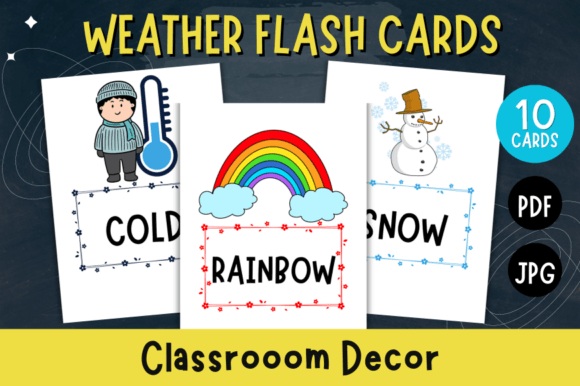
Weather Flash Cards Classroom Decor
Weather flash cards classroom decor is more than just a teaching tool—it's a dynamic way to bring the outside world into the classroom. These colorful, illustrated cards offer a hands-on approach to learning about weather conditions, making them ideal for educators looking to engage students in a fun and interactive way.
Designed with both education and aesthetics in mind, these flash cards are perfect for teachers who want to create a visually stimulating learning environment. Each card features a vivid image paired with a simple description, helping students make immediate connections between the visual and the concept. Whether it's a bright sunny day or a stormy night, these cards provide a clear and engaging way to teach weather vocabulary and concepts.
Real-World Applications of Weather Flash Cards
One of the most practical uses of weather flash cards is in early childhood education. Teachers can use them during morning meetings or as part of a daily weather routine. By displaying the cards on a wall or table, students can practice identifying and describing the current weather, building language skills and observational abilities in the process.
These cards also work well in science lessons focused on climate and environmental studies. Educators can use them to spark discussions about how different weather patterns affect ecosystems, agriculture, and human activities. For example, a lesson on rainfall could include a discussion on how farmers rely on consistent rain for crops, while a unit on storms might explore the impact of severe weather on communities.
Another valuable application is in ESL (English as a Second Language) classrooms. Weather flash cards serve as a visual aid that supports language acquisition. Students can learn new vocabulary words like "hail," "fog," or "sleet" by associating them with the corresponding images. This makes it easier for non-native speakers to grasp abstract concepts and build confidence in their communication skills.
Scenarios Where Weather Flash Cards Shine
During a unit on seasons, teachers can use weather flash cards to help students understand the differences between summer, winter, spring, and fall. By matching each season with its typical weather conditions, students gain a clearer understanding of how weather changes over time. This can be especially helpful for younger learners who are still developing their comprehension of temporal concepts.
For special education settings, weather flash cards can be adapted to meet individual learning needs. Some students may benefit from larger print or tactile versions of the cards, while others may prefer using the cards as part of a sensory activity. The versatility of these flash cards allows educators to tailor their use to suit different learning styles and abilities.
In after-school programs or tutoring sessions, weather flash cards can be used to reinforce classroom learning in a more relaxed setting. Parents or tutors can review the cards with students, asking questions like, "What happens when it rains?" or "How do you feel when it's windy?" This kind of interaction helps solidify knowledge and encourages critical thinking.
Who Benefits From Using Weather Flash Cards?
Teachers across various grade levels find value in incorporating weather flash cards into their curriculum. From kindergarten to middle school, these cards can be adjusted to match the developmental stage of the students. A first-grader might focus on basic weather terms, while a fifth-grader could explore more complex topics like weather fronts or climate zones.
Home school educators also appreciate the flexibility of weather flash cards. They can be used as part of a broader science curriculum or as a standalone resource for teaching weather-related topics. The cards can be integrated into daily lessons, field trips, or even family activities like planning a picnic based on the forecast.
Librarians and community center staff often use weather flash cards for educational events or storytime sessions. These cards make for an engaging visual component during presentations, helping to capture the attention of young audiences. They can also be used in workshops focused on environmental awareness or weather safety.
Considerations Before Using Weather Flash Cards
Before purchasing or implementing weather flash cards, it's important to consider the age and needs of the students. Younger children may require larger, more colorful cards with simpler language, while older students might benefit from cards that include more detailed information or scientific terminology.
The durability of the cards is another factor to keep in mind. Since they will be handled frequently, it's wise to choose cards made from high-quality materials that can withstand repeated use. Some sets come with laminated cards or sturdy cardboard, which can extend their lifespan and maintain their visual appeal.
Additionally, educators should think about how they plan to use the cards. Are they intended for group activities, individual study, or classroom displays? The answer to this question can influence the size, format, and number of cards needed. For example, a set meant for a wall display may require larger cards, while a set for small group work might be more compact.
Strengths and Limitations of Weather Flash Cards
One of the biggest strengths of weather flash cards is their ability to make learning about weather accessible and enjoyable. The combination of visuals and text caters to different learning preferences, helping students retain information more effectively. They also encourage active participation, as students can point, match, and discuss the cards during lessons.
However, it's important to recognize that weather flash cards are not a one-size-fits-all solution. While they are excellent for introducing basic concepts, they may not be sufficient for in-depth studies on meteorology or climate change. In such cases, they should be used in conjunction with other resources like books, videos, or digital tools.
Another limitation is that the cards may not cover all possible weather conditions. For instance, less common phenomena like thunderstorms, blizzards, or tornadoes might not be included in every set. Educators should ensure that the cards they choose align with their curriculum goals and the specific topics they wish to cover.